The Branding Process: How Strategy Becomes a Distinctive Brand System
A company can spend months refining its logo and still leave its sales team struggling to explain what makes the business different. The new identity might look sharp on launch day, but six months later the website, proposals, and campaigns are telling slightly different stories. By then, the business has a design problem all over again, even though the original issue was a lack of agreement about what the brand needed to communicate.
The branding process connects that underlying business decision to the things customers actually encounter. It starts by understanding what people need to believe before they choose you. From there, it gives the team a position it can defend, language it can use, and an identity it can apply across everything from a homepage to a sales presentation. Each phase should make the next set of decisions easier.
Whether you’re launching a new company or updating an existing brand, the scope depends on what already works. A business with strong recognition may have valuable elements worth carrying forward. A new venture may need to work out the offer and audience before it can brief a designer with any confidence. If you’re still deciding how much needs to change, our guide to choosing between a rebrand and a refresh is a good place to start.
What Happens During the Branding Process?
| Phase | Decision to make | What you should have at the end |
|---|---|---|
| Discovery | What does the business need the brand to solve? | A brief grounded in customer, business, and competitive evidence |
| Brand strategy | Who are we trying to reach, and why should they choose us? | Positioning, audience priorities, and the proof behind the promise |
| Verbal identity | How should the brand explain its value? | A messaging hierarchy, voice guidance, and copy examples |
| Visual identity | What should make the brand recognizable across channels? | An identity system tested on priority applications |
| Rollout | Where should customers see the change first, and who owns it? | A rollout plan, guidelines, and usable assets and templates |
1. Start With the Business and the Customer
Discovery should give you a clearer picture of where the brand is creating friction. Leadership can explain where the company wants to go. Sales and customer-facing teams can tell you where prospects hesitate, what questions keep coming up, and which parts of the offer take the longest to explain. Existing proposals, web pages, reviews, and competitor materials help show how the company is actually presenting itself and what customers have learned to expect from the category.
Imagine a custom homebuilder that gets most of its business through referrals. Referred prospects arrive having heard about the builder’s communication and attention to detail. Someone landing on the website for the first time sees attractive homes alongside the same claims about craftsmanship that appear on every competitor’s site. Discovery can uncover the gap between what a referral already knows and what an unfamiliar prospect needs to see before booking a call. That gap gives the branding team something specific to solve.
The output should be a brief both the client and the creative team can use. It should identify the audience, the business objective, the perception that needs to change, and the assets or equity worth preserving. It should also surface constraints early. A business that needs to update signage across several locations faces a different rollout from one that sells primarily through a website and a handful of sales materials.
2. Choose a Position the Business Can Defend
Positioning gives customers a reason to choose the business in a specific buying situation. A useful position makes clear who the company is best equipped to serve, what those customers value, and why they should believe the company can deliver it. Purpose and personality inform those choices. Evidence gives them credibility.
For the homebuilder, “exceptional craftsmanship” may describe a genuine strength, but buyers expect to hear it from any builder in that price range. If clients consistently value knowing how design decisions affect cost and schedule, the stronger territory may be the experience of building a complex home with fewer unknowns. That gives the business a reason to show its preconstruction process, explain when decisions get made, and provide examples of how it communicates changes. The positioning becomes useful because it helps the team choose what to say and what to show.
Before approving strategy, ask the agency to connect each major claim to something the business can demonstrate. That might be a documented process, a product feature buyers can see for themselves, or a project that illustrates how the team works. Agree on which audience and message lead when several are competing for attention. Those decisions belong in the brand strategy and give everyone a shared basis for reviewing the creative work.
3. Turn the Strategy Into Language People Can Use
Verbal identity puts positioning to work in headlines, sales conversations, proposals, and customer communications. It starts with a messaging hierarchy. What should someone understand in the first few seconds? What will they need to see before they believe it? What detail can wait until they’re further into the decision? A homepage, an introduction in a capabilities deck, and a proposal can draw from the same hierarchy while answering different questions.
Voice guidance gets useful when it shows how those choices affect the writing. If the homebuilder’s team wants to sound knowledgeable and direct, a proposal might explain when a price is fixed, what could change it, and when the client will hear about those changes. That example gives the next writer something to work with. A list of adjectives can help set the direction, but the team needs examples built around the conversations it actually has.
This is also a good point to test the messaging internally. Ask a salesperson to use the new introduction in a conversation or have someone outside the project explain the offer back after reading a sample homepage. If they miss the point or need extra context, find out where the language lost them. It’s easier to resolve that in a draft than after the website, sales deck, and campaign have all been built around it.
4. Explore Creative Directions, Then Build the Identity System
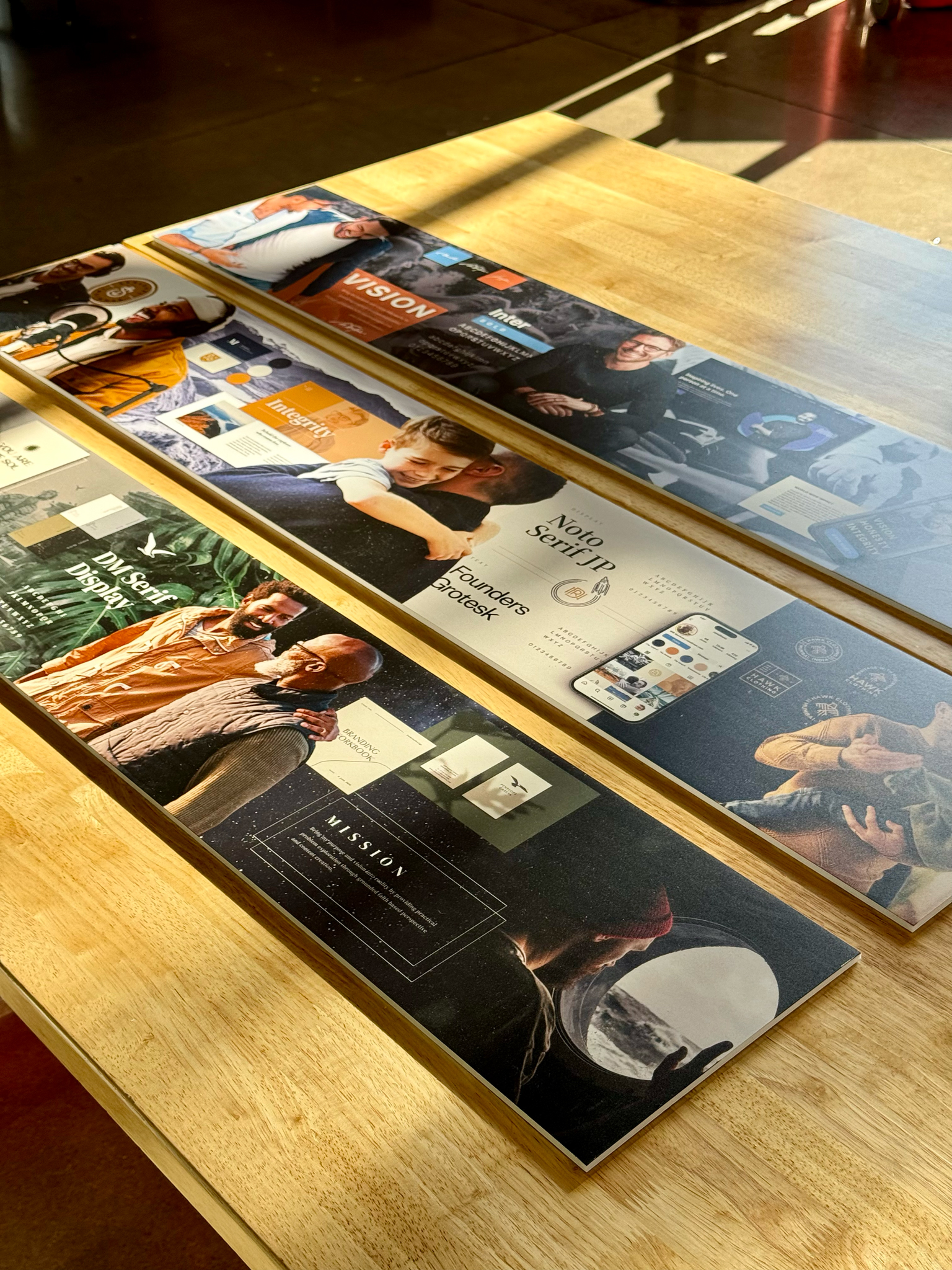
Creative exploration makes strategy visible. We can use stylescapes, which bring type, color, imagery, layout, and sample applications together, to compare how different visual directions express the same strategy. Seeing the elements together lets the team discuss the impression each direction makes and where it would work. For example, a photography-led direction might express a builder’s craft beautifully. If most customers first encounter the company in a proposal or a jobsite sign, that same direction needs graphic and typographic elements that can carry the brand when the photography is limited.
Once the direction is chosen, the design team builds the identity system. That can include logo configurations, typography, color, graphic elements, image direction, and layout rules. Test those decisions on the formats that put the most pressure on the design. A small mobile header reveals whether the mark remains recognizable. A text-heavy proposal shows whether the typography can guide a reader through detailed information. A single-color print application exposes which parts of the identity depend too heavily on color. Confirm that text and background combinations remain readable in everyday use.
At the creative review, ask the team to show the same direction across two or three uses that matter to the business. Look for a family resemblance across those pieces and enough flexibility for each to do its job. A system that passes that test is easier to hand off because the principles are visible in work the client can recognize.
How This Came Together for Morgan Ryan
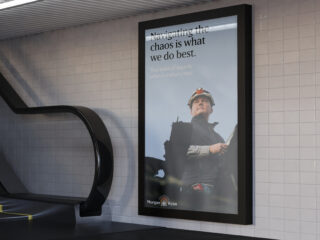
In our work with Morgan Ryan Inc., discovery surfaced a basic question with significant implications for the brand. Many people facing a property insurance claim were unfamiliar with public adjusting and the role Morgan Ryan could play. The brand needed to make that role understandable to people who might be dealing with a claim for the first time.
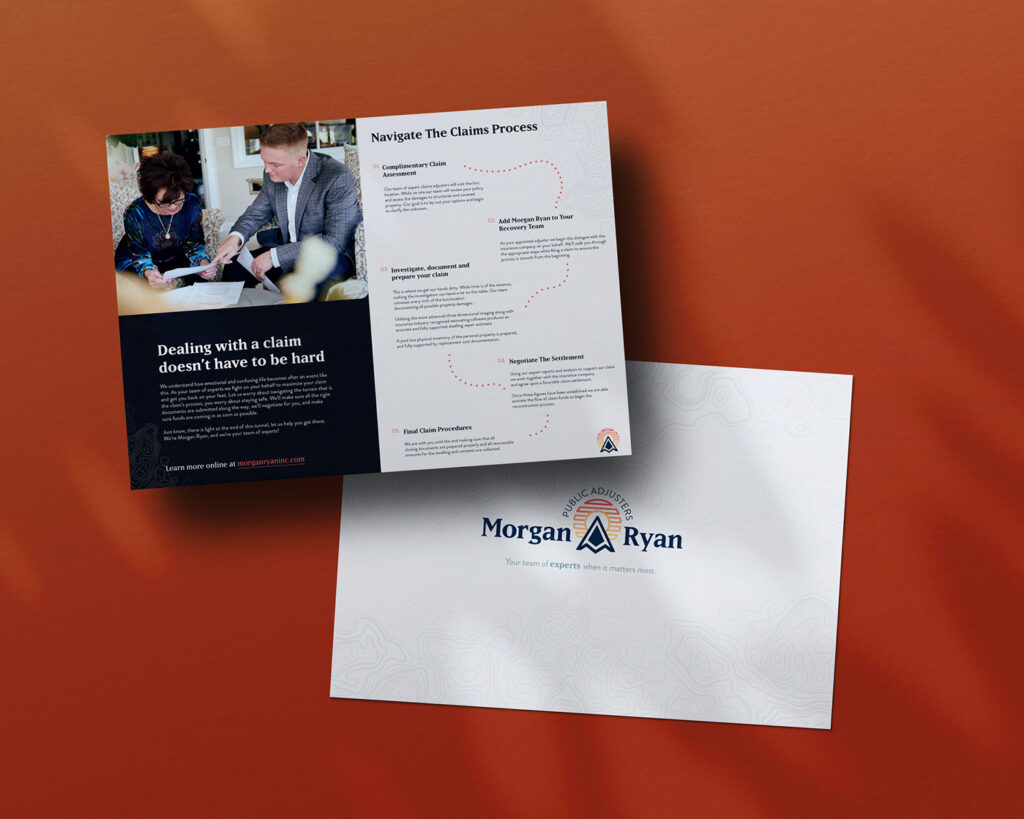
We built the positioning around Morgan Ryan’s ability to guide policyholders through the claims process. The identity expressed that idea through a compass detail in the mark and a set of logo configurations suited to different applications. On the website, guidance took a more practical form. We created a knowledge center, mapped out the claims process, and made it easy to reach a claims expert. Print collateral extended the brand into the materials clients encounter during a claim.
Each application served a different purpose. The mark gave the brand a recognizable symbol. The website helped people understand what happens next. The print materials carried the identity into direct interactions with clients. The strategic idea gave the design, content, and customer experience teams a shared decision to work from.
5. Plan the Rollout Around How Customers Encounter the Brand
Start the rollout with an inventory of where the brand shows up, then prioritize the materials that shape a customer’s first impression or help them make a decision. For a service business, that might mean the website, capabilities deck, proposal template, and email signatures. For a consumer brand, packaging production dates or retailer requirements may dictate the order. Identify which pieces need to launch together and which can be replaced as existing stock runs out or materials come up for revision.
The handoff should give the people doing everyday work both the assets and the rules for using them. Brand guidelines should cover common decisions such as choosing a logo variation, laying out a document, writing in the appropriate voice, and selecting imagery. Editable templates and clearly named files help teams apply that guidance without involving a designer in every presentation or social post. Assign someone to maintain the asset library and answer questions when a new application falls outside the examples.
A useful test before launch is to ask someone who wasn’t in the branding meetings to build a piece of recurring work with the new materials. If they can produce a recognizable proposal cover or adapt a social template on their own, the handoff is doing its job. If they get stuck on which files to use or how to write the opening, you have a specific gap to address before rollout.
What Should You Ask Before Starting a Branding Project?
- What business decision needs to be clearer by the end of discovery?
- Which elements of the existing brand have recognition we should carry forward?
- Who approves strategy and creative, and what will they use to evaluate each?
- Which real applications will we design and test before approving the identity?
- What files, templates, and rollout support are included in the handoff?
Use those questions to compare scopes and identify what your team will need to own. One proposal may cover positioning through rollout, while another may end with visual identity and guidelines. The right scope depends on where your team needs help and which applications have to work on day one.
If you’re planning a launch or your current brand is struggling to keep up with the business, tell us what has changed and where you’re feeling the friction. We can help you decide what to keep, what to develop, and where the work should show up first.